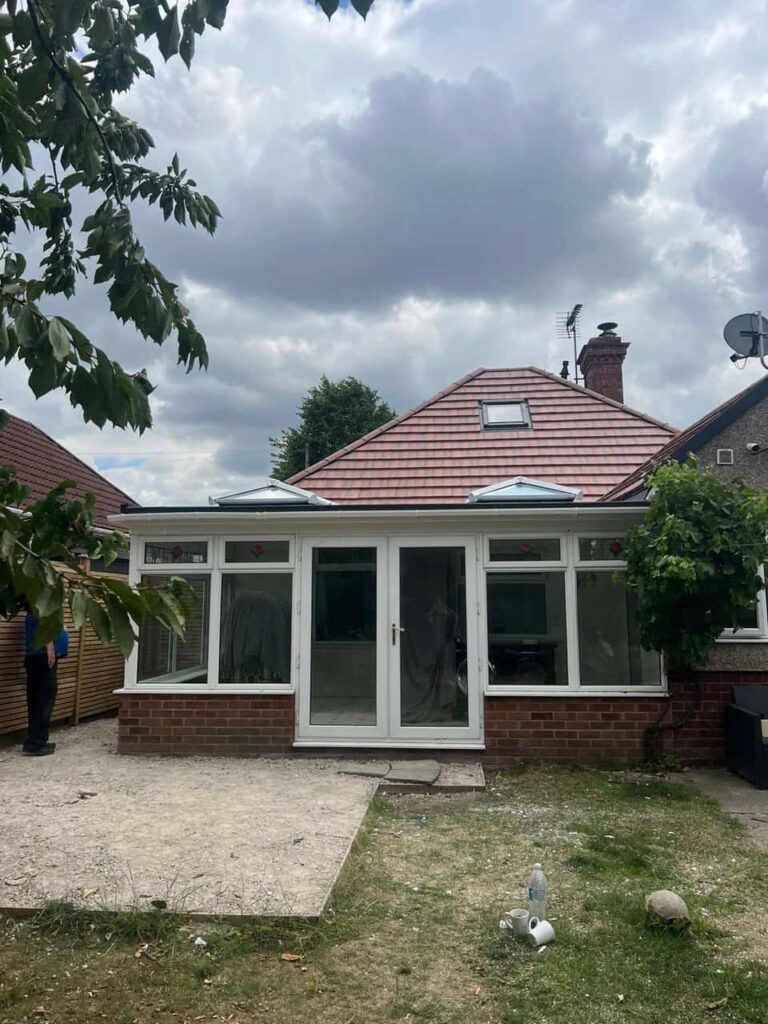
Chimneys create several junctions where the masonry meets the roof covering. These areas must remain properly sealed while still allowing rainwater to drain safely around the chimney. Lead flashing performs this essential role by forming a weather-resistant barrier between the two surfaces.
When chimney flashing becomes damaged, rain can enter beneath the roof covering and cause a leak that repeatedly returns during wet weather. For homeowners in Ripley, Derbyshire, understanding how this happens can make it easier to recognise when professional roof repairs are needed.
Why Damaged Chimney Flashing Can Lead to Repeated Water Ingress
Chimney flashing is made up of carefully fitted sections rather than one continuous sheet. Each section must overlap correctly and connect securely with the masonry, roof tiles and drainage path.
What Does Chimney Flashing Do?
Flashing directs rainwater away from the joint between the chimney and the roof. A typical installation may include a front apron, side flashings or soakers, and a back gutter positioned behind the chimney.
These components work together to prevent water from entering gaps around the stack. If one section becomes loose, split or incorrectly positioned, moisture can pass beneath the protective layers.
Why Chimneys Are Vulnerable to Leaks
A chimney interrupts the natural flow of water down the roof. Rain running from the roof slope must be guided around both sides of the stack before continuing towards the gutter.
Water can collect behind the chimney or be driven against the side joints during windy conditions. This means even a relatively small flashing defect may be repeatedly exposed to moisture.
Cracked or Split Lead Flashing
Lead is durable and flexible, but it can eventually develop splits due to age, repeated temperature changes or restricted movement. Cracks may be small and difficult to identify from ground level, yet still allow water to enter.
Once moisture reaches beneath the lead, it can travel across the underlay, battens or roof timbers before appearing inside the property. The visible damp patch may therefore be some distance from the chimney.
Flashing That Has Lifted Away from the Masonry
The upper edge of the flashing is normally secured into the chimney masonry. If it works loose, a narrow gap can form where rainwater runs down the stack.
Wind-driven rain can enter this opening and continue behind the flashing. Applying a temporary surface seal may not provide a lasting solution if the lead itself has become loose or incorrectly fixed.
Failed Mortar Around the Flashing
The joints surrounding chimney flashing can deteriorate through prolonged weather exposure. Crumbling or missing mortar may leave the edge of the lead inadequately secured.
Repairing this area requires careful inspection because the visible mortar defect may not be the only issue. The flashing may also have moved, split or become distorted beneath the surface.
Problems with the Back Gutter
The back gutter sits on the upper side of the chimney, where rainwater flows down the roof towards the masonry. Its purpose is to collect this water and direct it safely around the stack.
Leaves, moss and roofing debris can restrict this drainage route. Water may then collect behind the chimney and exploit weak joints, damaged lead or gaps beneath nearby tiles. A poorly formed or deteriorated back gutter can therefore produce persistent leaks during prolonged rainfall.
Damaged Soakers or Side Flashings
Soakers are fitted beneath tiles or slates along the sides of a chimney. They overlap one another to create a concealed route that carries water away from the junction.
Because soakers are partly hidden, defects are not always visible during a basic inspection. A missing, displaced or corroded section can allow moisture beneath the covering even when the exposed flashing appears reasonably sound.
Why the Leak May Come and Go
Chimney flashing leaks do not always appear every time it rains. The direction of the wind, duration of the rainfall and volume of water reaching the chimney can all affect whether moisture enters.
Light rain may drain away without causing an obvious problem, while prolonged or wind-driven rain can push water into a vulnerable joint. This intermittent pattern can make the source difficult to trace without examining the complete chimney junction.
Warning Signs Inside the Property
A damaged chimney flashing may cause damp staining on ceilings, walls or chimney breasts. Other possible signs include peeling decoration, a musty smell, discoloured roof timbers or damp insulation within the loft.
These symptoms should not be used to locate the defect on their own. Water can move along structural components before becoming visible, so the internal stain may not sit directly below the entry point.
Why Surface Patching May Not Last
Applying sealant over an exposed gap may temporarily reduce water ingress, but it does not necessarily correct damaged or poorly fitted flashing. Surface products can also deteriorate if the lead continues to move naturally with temperature changes.
An effective repair should address the condition of the lead, its overlaps, its connection with the masonry and the surrounding roof coverings. Treating only the most obvious crack can leave another vulnerable section unresolved.
How a Professional Inspection Helps
A roofing contractor can inspect the front apron, side flashings, soakers, back gutter, masonry joints and adjacent tiles. The loft area may also be examined for moisture patterns that help identify how water is travelling.
This wider assessment determines whether the problem requires a local repair, refitting of loose sections or replacement of deteriorated flashing. It also helps rule out nearby defects that could produce similar symptoms.
Conclusion
Damaged chimney flashing can cause a persistent leak because it compromises one of the roof’s most exposed junctions. Split lead, loose fixings, failed mortar, blocked back gutters and damaged soakers can all allow rainwater beneath the roof covering.
Ripley Roofing Repairs can assess the complete chimney junction and identify the source of recurring water ingress. If you have noticed dampness near a chimney in Ripley, Derbyshire, contact our team to arrange a professional roof inspection.
Call us on: 01773 300 896
Click here to find out more about Ripley Roofing Repairs
Click here to complete our contact form and see how we can help with your roofing needs.